Stock Halted? Here's What Happens to Your Options
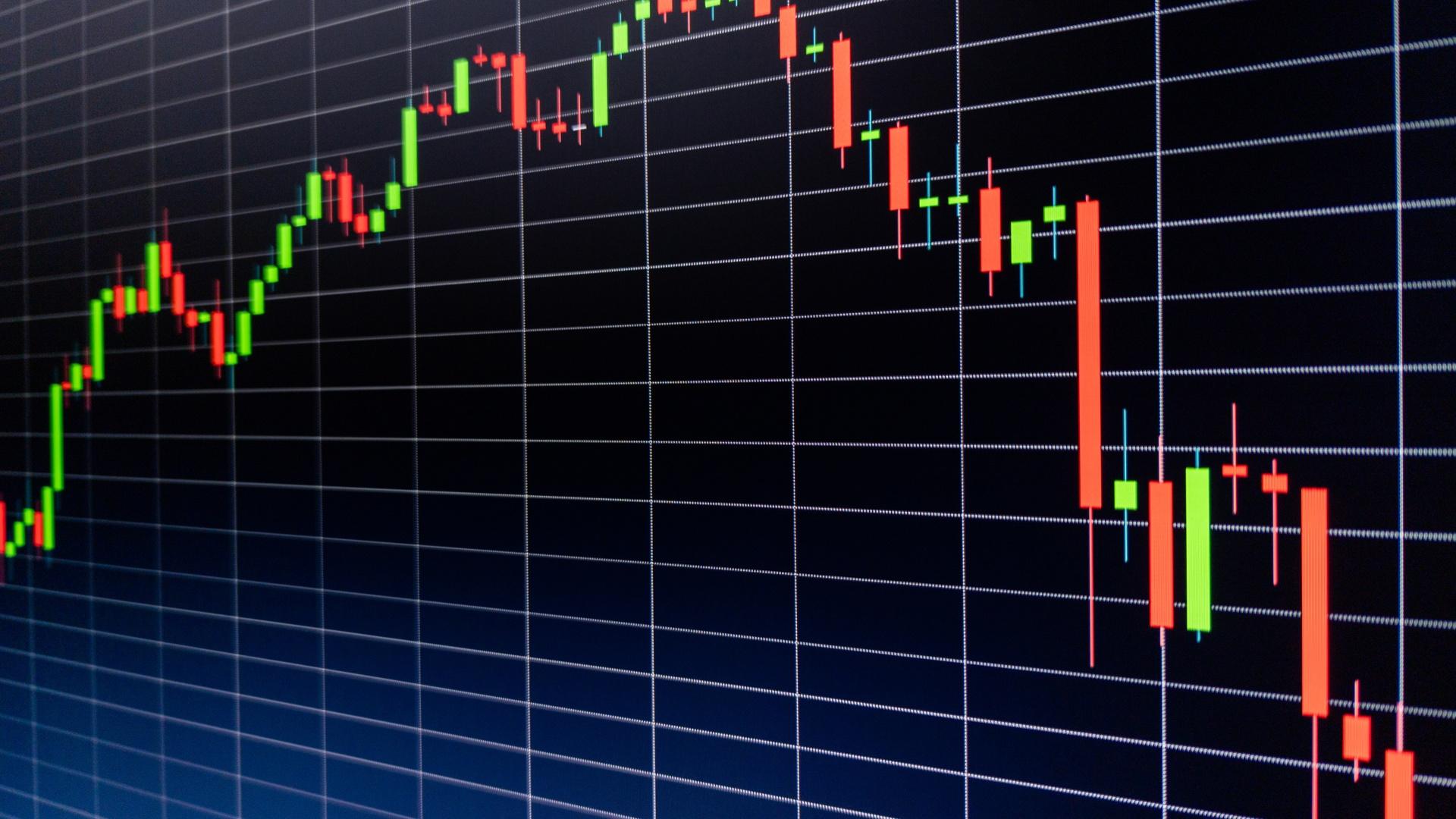
You're holding a position. The stock halts. The quote freezes on the screen, your order won't fill, and there is nothing — not a market order, not a panic click, not a phone call — that gets you out until the exchange says so.
Most traders learn this the first time it happens to them, usually at the worst possible moment: a pending FDA decision, a leaked headline, an earnings number nobody saw coming.
Here's what actually happens to an open options position when the underlying stops trading, and how to structure positions beforehand so a halt can't do more damage than you already priced in.
What a halt actually is
"Halt" covers a few different mechanisms, and which one you're dealing with changes what happens next.
- Regulatory / news-pending halt: An exchange pauses a stock ahead of material news — an acquisition, a drug trial result, a guidance update. These can run minutes or, in rare cases, days.
- LULD volatility halt: Limit Up-Limit Down bands pause a stock for roughly five minutes if the price tries to move outside a calculated percentage band and stays there. These are short and mechanical, not news-driven.
- Market-wide circuit breaker: A separate system that halts the entire market, not a single name, when a broad index falls a set percentage in a session. Rare, and not the focus here.
What happens to your options when the stock halts
The part most traders don't expect: the options usually halt too.
Options exchanges generally pause trading in a stock's listed options alongside a regulatory halt in the underlying, because market makers can't hedge an options position without a tradable stock to delta-hedge against. Quoting can get extremely wide or disappear entirely even in the seconds before an official halt is posted, as liquidity providers pull back.
Short LULD volatility halts sometimes leave the options technically tradable, but in practice the bid-ask can blow out so wide that any fill is a bad one. Either way, the operating assumption should be the same:
Once a halt is declared, assume you cannot close your position until trading resumes. Plan every position that carries halt risk as if the exit button were going to disappear.
Resting and new orders during a halt
- Existing limit orders to close a position typically just sit unfilled — no trades are occurring, so nothing executes, but the order itself usually isn't automatically canceled.
- Some exchanges reject or cancel open orders outright once a halt is declared, depending on the venue and order type — check your broker's halt policy before you need it, not during.
- Market orders submitted during a halt generally queue and execute against the reopening print — whatever price that turns out to be, with no price protection.
The reopen is where the real risk shows up
Exchanges reopen a halted stock through an auction or rotation process that finds a new clearing price from accumulated buy and sell interest — not a simple resumption at the last traded price.
That reopening print can gap significantly from where the stock was trading when it halted, especially for a news-driven halt. A stock halted at $40 on acquisition rumors can reopen at $55 or $28. Options reprice instantly along with it: intrinsic value resets to the new stock price, and implied volatility — which had nowhere to go while quotes were frozen — collapses or expands in a single tick once trading resumes.
If you were short premium going into the halt, you find out your actual exposure the moment the reopen prints, not before. If you were long premium hoping for a move, the IV crush on the reopen can erase gains you'd have expected from the stock move alone.
What happens if expiration lands during a halt
If a stock is still halted when standard expiration processing runs, the default automatic-exercise rule generally still applies based on the option's recorded moneyness — in-the-money options are typically exercised, out-of-the-money ones typically expire worthless — but you may have had no ability to close or adjust the position beforehand, and procedures can be adjusted case by case for genuinely disrupted names.
- Confirm your broker's exercise-by-exception cutoff and override process before you ever need it — not while you're refreshing a frozen quote.
- A long call or put that's borderline ITM/OTM on a halted stock is the highest-stress version of this: you may be auto-exercised or expire worthless based on a last price that no longer reflects where the stock is about to reopen.
- Short options on a halted underlying carry assignment risk under the same default rules, with the same inability to close first.
Positioning before a known catalyst
You can't predict every halt, but binary catalysts with real halt risk — FDA decisions, merger votes, earnings after unusual pre-announcement silence — are often known dates on the calendar. Size and structure around them accordingly.
- Favor defined-risk spreads over naked positions. A short strangle has theoretically unbounded loss that a halt-then-gap can realize before you get a chance to adjust. A defined-risk spread caps the loss at the width between strikes — still painful, still your full max loss in the worst case, but a known number rather than an open one.
- Treat spread width as your real risk, not the premium paid or collected. A 10-point vertical's max loss is 10 points (minus credit received, or the full debit paid) if the reopen gaps through both strikes — not the smaller number you were tracking as your "stop."
- Cut position size specifically for the catalyst window. A size that's comfortable on a normal 30–45 DTE trade can be too large once you factor in a reopening gap you can't trade out of. Many traders halve standard size for positions held directly into a known binary event.
- Avoid 0DTE or near-dated contracts into halt-risk events — including earnings trades. There's no time-value cushion left to absorb a bad reopen, and gamma near expiration amplifies the swing in both directions.
- If you don't want the exposure, close before the catalyst — not after it starts trading again. Once a halt is called, that choice is gone.
None of this prevents a loss — it just makes the loss a known, bounded number instead of an open-ended one you discover at the reopen. Defined-risk structure still carries real downside: full width-of-strikes loss is still a loss, and smaller size still means smaller gains if the catalyst goes your way.
The takeaway isn't "avoid catalysts"
Plenty of traders deliberately position around earnings, FDA dates, and merger votes — that's not the problem. The problem is sizing and structuring a position as if you'll always have the option to close it, when a halt can take that option away at the exact moment you'd want it most.
The takeaway
A halt doesn't create risk — it just removes your ability to manage risk you already had. Structure the position so the worst case is one you already accepted going in.
The next time you hold options into a known binary event, is your max loss actually bounded — or does it just feel that way until the stock stops trading?
Options involve substantial risk and are not suitable for every investor. Nothing in this article is a recommendation to buy or sell any security. Trading halt procedures vary by exchange and situation and can change without notice. Before trading options, read the OCC's Characteristics and Risks of Standardized Options.